Running an online store? Google ranking can make or break your growth. Ecommerce SEO is your long term revenue driver. But while investing in SEO, it is really important to know what you are actually getting in return. Choosing the best package is essential for result oriented strategies and measurable results.
Whether you operate a startup or manage an online store, monthly SEO cost will depend on various factors such as competition, store size and growth goals.
With the help of this blog, you will be able to understand the ecommerce SEO pricing model, monthly cost and their deliverables. It will help you make confident and ROI driven decisions.
What is Ecommerce SEO?
Ecommerce SEO is a process where marketing agencies optimize your store’s organic traffic, letting you gain traffic that converts. Its primary focus is to attract high intent ready-to- buy shoppers and increase sales with the help of organic traffic, without paid ads. It’s a strategic search engine optimization process that includes services like on-page optimization, off page SEO and Technical SEO.
How much does Ecommerce SEO cost per month in 2026?
Ecommerce SEO pricing varies on the factors such as size of the organization or the model adopted. In 2026, for a small to mid- sized organization the cost lies between $500 to $1500 per month whereas for an enterprise SEO cost can vary from $1000 per month to $8000 per month. According to the industrial survey, here is an Ecommerce SEO cost per month breakdown:
| SEO Service Type | Monthly Range (USD) | Best For |
|---|---|---|
| Basic SEO | $500 - $1500 | Small stores, limited products, startups |
| Mid-Level SEO | $1500 - $4000 | Scaling stores, expanding product categories |
| Full Service SEO | $4000 - $10,000+ | Growing, competitive industries |
| Enterprise SEO | $8000 - $20,000+ | Global ecommerce brands, large catalogs |
| Hourly SEO Consultation | $100 - $300 per hour | One-time project audits or gap analysis |
| Project Based SEO | $2000 - $30,000+ | SEO audits, site launch, migration |
Ecommerce SEO Pricing models Explained
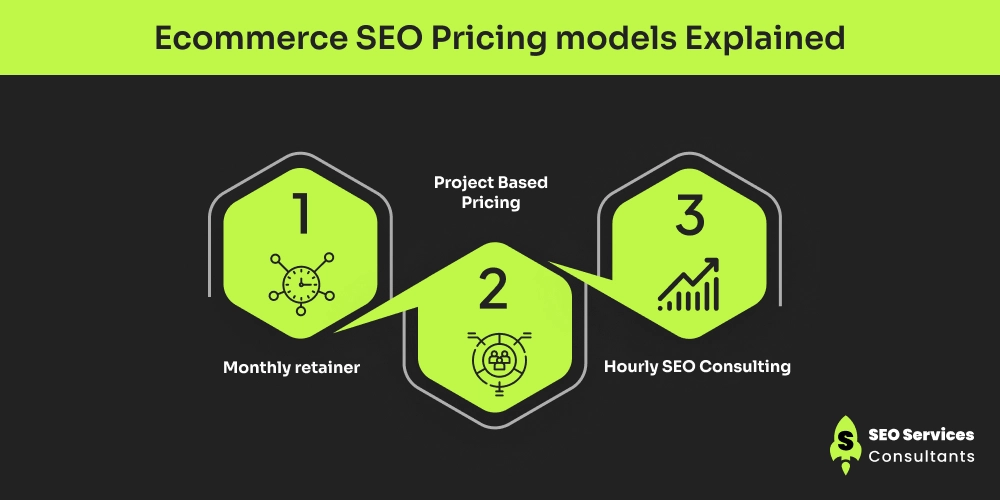
While most ecommerce businesses choose to invest in a monthly SEO plan, marketing agencies offer different pricing models depending on the store size, competitive environment, current technical health and what outcomes you require. Understanding these SEO pricing models is essential to evaluate proposals and choose the right approach for your store. Primarily there are three SEO pricing models to choose from:
1. Monthly retainer
- Monthly retainers are the most common ecommerce SEO pricing models. Since SEO is an ongoing strategy, the majority of the ecommerce businesses opt to pay on a monthly basis.
- The advantages include predictable budgeting, continuous optimization and overall improvement in website ranking.
- Best for scaling ecommerce businesses looking for long term growth and traffic consistency.
2. Project Based Pricing
- This pricing model is adopted by businesses that require support on implementing specific projects.
- Services included in this model are specific task projects such as technical SEO audit, a full site migration, large technical fixes, content strategy and link building.
- Best for businesses that have inhouse resources to manage projects but require expert guidance to process and don’t wish to commit to a long term project.
3. Hourly SEO Consulting
- With this model, businesses pay for SEO experts on an hourly basis.
- Best for the businesses that need expertise or consultation for trouble shooting or need experts in specific areas.
What are the factors that affect Ecommerce SEO cost?
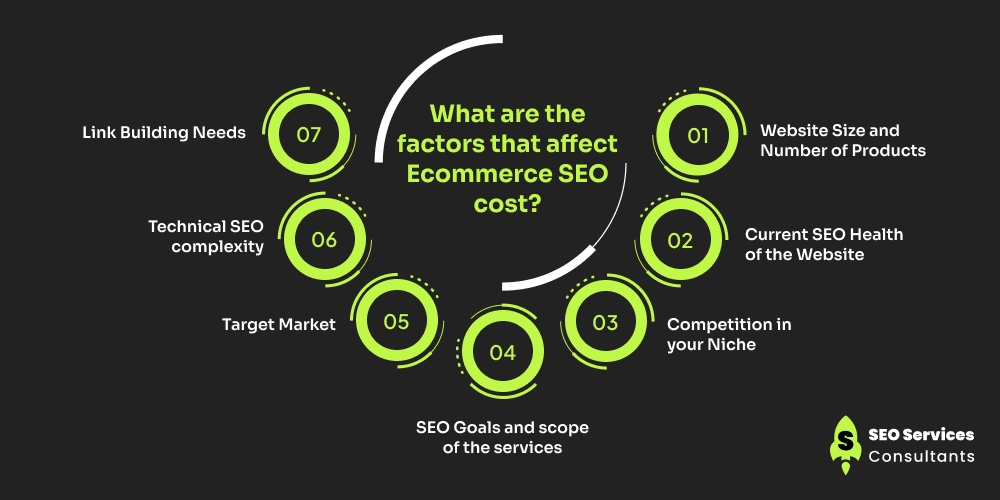
Every business is unique. From store size to level of competitors in your industry, there are several factors that influence the cost of Ecommerce SEO. Let’s understand each one of them in detail.
1. Website Size and Number of Products
The size of your store and product catalog will decide the amount of SEO effect required. If your site has a large number of product and category pages, each one of them would be required to have specific meta tags without any duplication. More pages will involve more technical jargon so that each of them is indexed and crawled properly.
2. Current SEO Health of the Website
The cost will depend on the current health of your website. If your website already has a strong SEO foundation, the cost required would be minimal. On the other hand, if your website has multiple search engine optimization issues such as broken links, slow speed, poor site speed or content, fixing these problems will attract more SEO investment adding up to the cost.
3. Competition in your Niche
Ecommerce niche such as fashion, health products or electronics are the ones with highest competition. They usually demand aggressive SEO measures. They demand stronger efforts, high quality backlink and content strategy. The cost involved will be higher in these competitive niches. In lesser competitive industries, achieving rank is easier and therefore the services are cheaper.
4. SEO Goals and scope of the services
If your goal is small and scope is narrow, you will be required to make a small investment based on our services such as, improving organic traffic or scaling visibility across an entire catalog. But if you have a broader scope, it will involve multiple resources, more time and budget.
5. Target Market
Ecommerce SEO will depend on the size of your target market. If you are targeting the local market, the reach is smaller and the cost would be cheaper. But if you are targeting a nationwide campaign with a broader global reach, the prices will rise as per the reach of your campaign.
6. Technical SEO complexity
Ecommerce websites requiring setting up complex technical issues would need more expertise and will be attracting more SEO cost.
7. Link Building Needs
Link building is essential for building and maintaining higher domain authority. If your niche has a strong domain to compete with, there will be higher cost for link building campaigns, outreach, and PR driven SEO efforts.
What are the monthly ecommerce SEO deliverables?
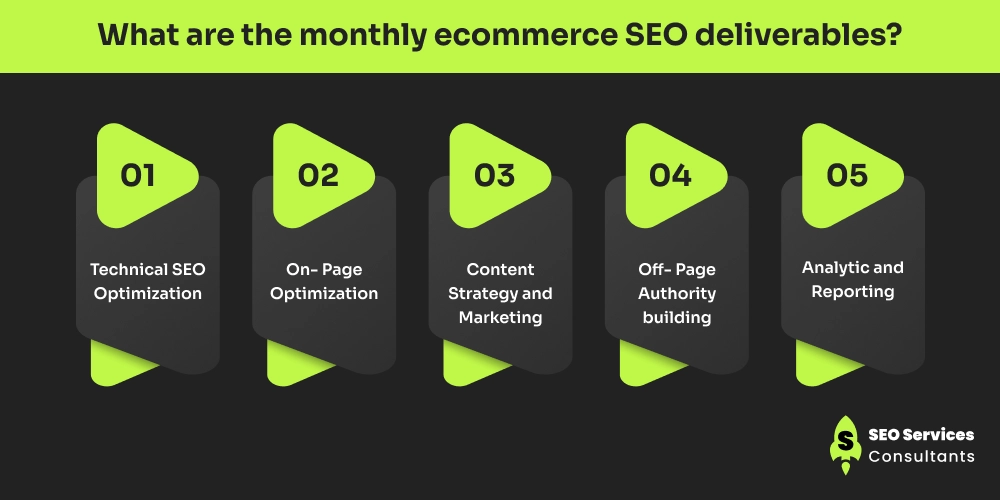
While investing in ecommerce SEO, it is essential to understand what services you will be getting every month. Although these deliverables may vary for different agencies, most plans includes the following core components:
1. Technical SEO Optimization
- Site auditing and fixing crawling errors: Regular website scanning to identify and fix 404 errors, broken links and content duplication issues.
- Core web vitals and Page speed optimization: Improving the site speed by making the page more responsive and optimizing the images.
- Schema Management: Adding and maintaining structured data so that search engines can better understand your website content and display rich results.
- Product filter management: Optimizing product filter to ensure proper crawling and indexing, preventing page duplication.
2. On- Page Optimization
- Category Page optimization: Updating title tags, heading and description to ensure more visibility and better ranking for relevant keywords.
- Improving Product Description: Increasing page relevance by writing unique and appealing content without repetition.
- Internal linking optimization: Creating smart interlinking between blog, services and category pages to strengthen their links and improve SEO.
- Image SEO: Optimizing product images alt text tags and file names to improve their searches.
3. Content Strategy and Marketing
- Blog content creation: Creating SEO optimized blogs, guides, articles or comparison guides to attract visitors.
- Content optimization strategy: Optimizing and updating existing blogs and website pages with SEO focused copywriting and targeted keywords for relevancy and better ranking.
- Keyword research and mapping: Identifying high-intent keywords and assigning them to specific product pages to ensure correct search queries and optimized results.
4. Off- Page Authority building
- Link building and outreach: Getting high quality back links from external sites via guest posts, product features or collaboration to improve domain authority.
- Digital PR: Promoting your product through bloggers or influencers to improve your brand visibility.
- Local SEO: Optimizing your business for local searches by managing Google business profile and local directory submission.
5. Analytic and Reporting
- Monthly performance report: A detailed report showing SEO performance, organic traffic, keyword ranking and conversions.
- Revenue tracking and ROI: Measuring impact of SEO on your business and how SEO contributes to your sale.
- Competitor Analysis: Analysing competitor’s strategy to identify gaps and opportunities.
Why is Ecommerce SEO a smart investment for long term growth?
Ecommerce SEO is smart, long term investment as it drives sustainable organic traffic that browses with buying intent. It improves sites visibility, user experience and builds brand trust. Let’s understand in detail why ecommerce SEO is a smart investment move.
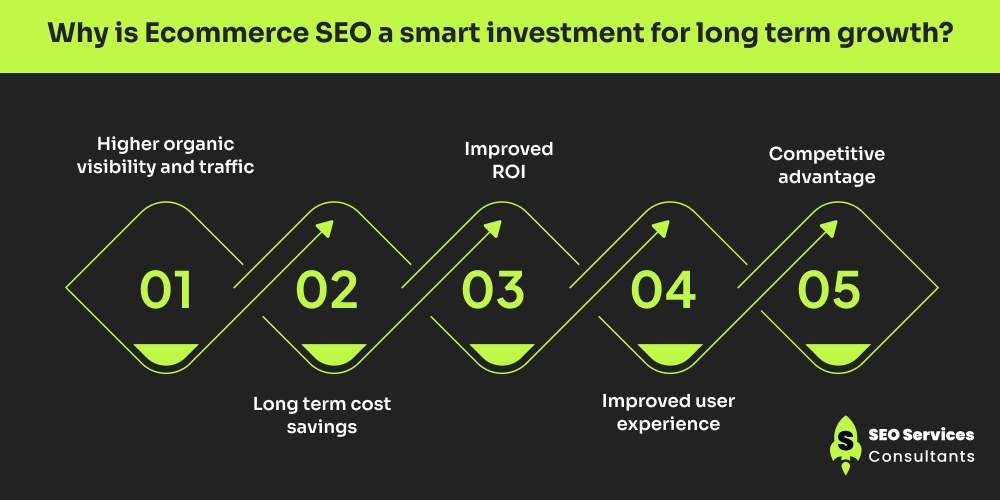
- Higher organic visibility and traffic: Ranking higher on Google helps your brand get higher visibility and traffic.
- Long term cost savings: Ecommerce SEO reduces the reliance on recurring pay per click campaigns by bringing convertible potential users to your site, thereby saving cost in long terms.
- Improved ROI: It helps you attain organic traffic that converts improving your return in investment.
- Improved user experience: SEO efforts improve page speed, make the design more user friendly and reduce bounce rates.
- Competitive advantage: With SEO efforts even small brands can compete with larger ones and secure a place in a crowded business environment.
Conclusion
Ecommerce SEO pricing may vary based on your store size, competition and goal, the real value lies in what you gain. With the right strategy, ecommerce SEO delivers consistent traffic, higher visibility and long term revenue growth.
It helps you build a scalable long term revenue channel for your business and reduces your reliance on paid ads. When executed effectively, SEO becomes a powerful engine for your online store growth.