


Content needs depend entirely on your business offerings, target audience, competition, tactics, and business size. In a nutshell, you can’t decide what particular word count, blog or number of pages is enough for your business is not the right approach. To know more, read the complete article that will help you to understand.
You may think publishing more blogs and adding more pages will help your website rank higher on Google. But how much content is actually enough?
The answer is: there is no fixed number of pages, blog posts, or words your website needs to rank on search engines.
A small business website and a large ecommerce store have very different content needs. Publishing 50 blogs won’t help much if they don’t answer your audience’s questions or bring relevant traffic.
The goal isn’t to publish more content. It’s to publish the right content. In this guide, you’ll learn how to estimate your website’s SEO content needs, identify content gaps, and decide what to create next without wasting time on pages your audience doesn’t need.
Before deciding to create more content, ask yourself three questions:
- Does your website cover your main offerings?
- Does Your Content fill the gaps that your competitor missed?
- Are your existing page doing their Job?
How Much Content Does Your Website Need Based on Its Type?
The easiest way to estimate your content needs is to start with your business model. Different websites need different types of pages to attract visitors and help them make decisions.
Small business and local service websites
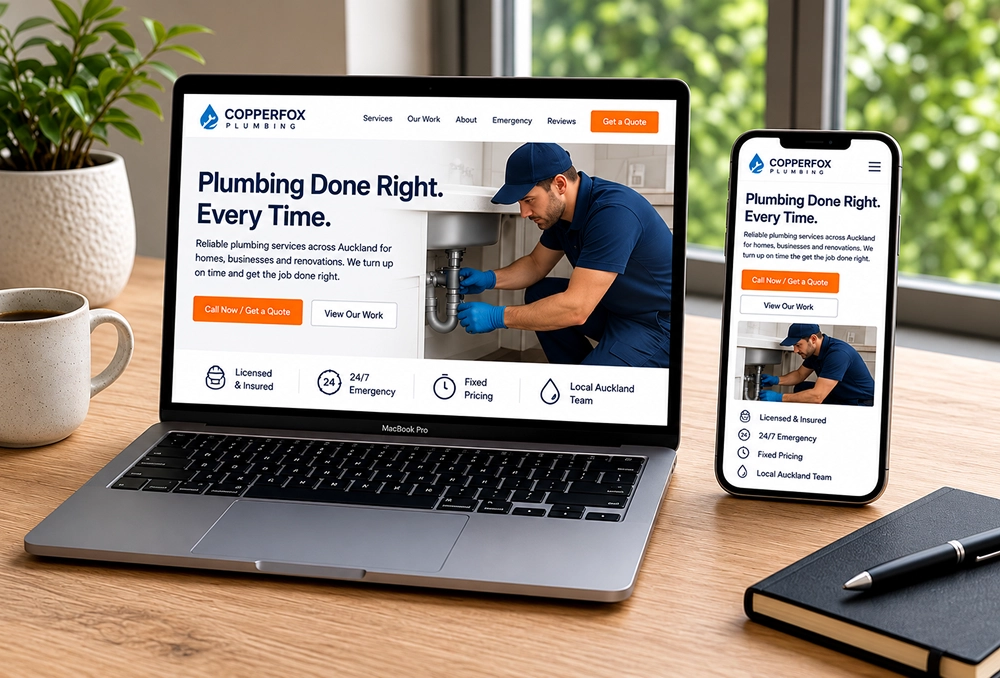
Start with your homepage, individual service pages, about page, contact page, and relevant location pages. Add articles that answer customer questions about pricing, processes, and choosing a provider.
Example: A plumber offering three distinct services may need three focused service pages rather than one generic page listing everything.
Ecommerce websites

Content needs grow with the product catalogue, category structure, and customer search behaviour. Prioritize useful category pages, original product descriptions, buying guides, and product comparisons where they help shoppers.
Avoid creating separate indexable pages for every minor product variation when they offer no distinct search value.
Also, check out our blog on ecommerce SEO costs.
SaaS and B2B websites

Build content around the problems your software solves, its features, use cases, integrations, industry applications, and comparisons. Add case studies and detailed resources when they help buyers evaluate solutions.
A complex product may require more explanatory content than a straightforward tool.
Want to know how much SEO costs for a SaaS website? Read our blog: SaaS SEO Cost: Pricing Models for Fast-Growing Companies.
Blogs and content-focused websites

Build connected groups of articles around your main subjects. Cover introductory questions, practical how-to guides, comparisons, and more specialized topics when they serve your audience. Ten closely related, useful articles may provide better coverage of a subject than dozens of unrelated posts.
These are planning principles, not recommended page-count quotas. The number of pages should emerge from the services you offer, the products you sell, and the questions your audience needs answered.
What Factors Determine How Much SEO Content You Need?
Even two businesses in the same industry can have different content requirements. Consider these five factors before setting a publishing target.
Your business goals and target audience
A website designed to generate enquiries needs clear service pages and content that helps potential customers choose a provider. An ecommerce website needs pages that help shoppers discover, compare, and purchase products.
Start by identifying the actions you want visitors to take. Then work backward to determine what information they need before taking those actions.
Keyword opportunities and search intent
SEO Keyword research helps you discover the questions people ask and the solutions they look for. However, one keyword does not automatically mean one new page.
Suppose people search for “SEO content planning,” “SEO content strategy,” and “how to plan SEO content.” If these searches share the same intent, one well-structured guide may address them together.
Create separate pages when the searches represent meaningfully different needs. This keeps your website organized and reduces unnecessary overlap.
Competitor content and search competition
Review the pages ranking for your target topics. Look at what they explain, which questions they answer, and whether they provide useful examples or evidence.
Don’t simply copy their page counts or word counts. Identify what readers still need: clearer explanations, original research, practical templates, or examples based on real business situations.
Your existing content
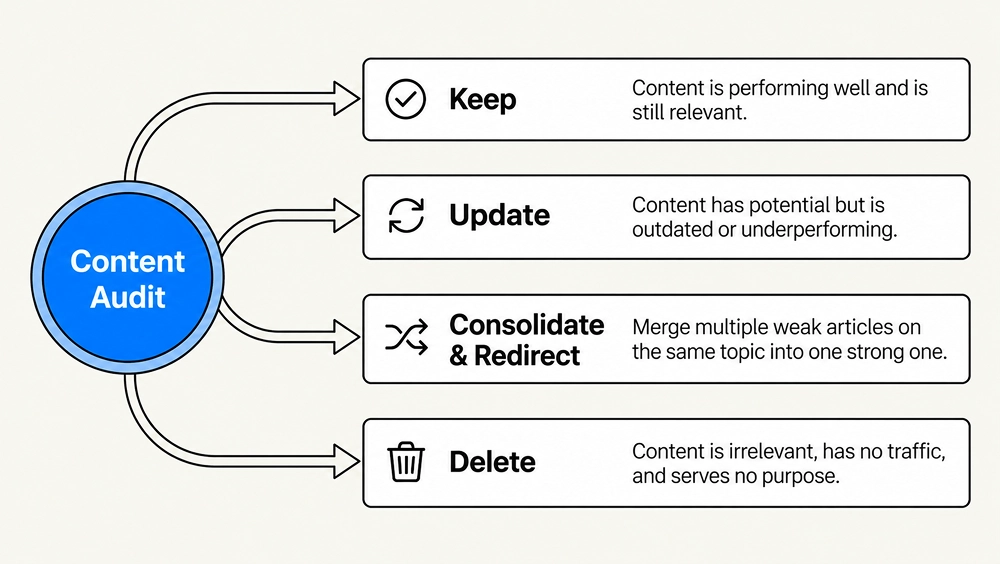
Your website may already have pages covering many relevant topics. Before commissioning new articles, check which pages need updating, which overlap, and which fail to answer their intended queries.
A content audit can reveal opportunities to improve existing assets instead of continually expanding the website.
Your budget and production capacity
Content requires more than writing. Research, expert review, editing, design, publishing, and maintenance all take time.
Set a publishing schedule your team can sustain without sacrificing accuracy or usefulness. Google recommends creating helpful, reliable, people-first content rather than producing pages primarily to attract search traffic.
How to Calculate How Much SEO Content Your Website Needs
You don’t need to guess a page count. Use the following process to build a content plan from actual business and search opportunities.
- List your main services, products, and categories. Identify what the business offers and which offerings matter most commercially. Each important offering should have an appropriate destination on the website if it serves a distinct customer need.
- Research keywords and group them by intent. Use keyword research tools, Search Console data, customer questions, and competitor analysis to identify relevant topics. Group similar queries when one page can satisfy the same underlying need.
- Map topics to existing URLs. Assign each topic to an existing page where appropriate. Mark topics that lack a suitable page and investigate whether they justify new content.
1. List your main services, products, and categories.
Identify what the business offers and which offerings matter most commercially. Each important offering should have an appropriate destination on the website if it serves a distinct customer need.
2. Research keywords and group them by intent.
Use keyword research tools, Search Console data, customer questions, and competitor analysis to identify relevant topics. Group similar queries when one page can satisfy the same underlying need.
3. Map topics to existing URLs.
Assign each topic to an existing page where appropriate. Mark topics that lack a suitable page and investigate whether they justify new content.
Use a simple worksheet to organize your findings.
Topic |
Existing page |
Content gap |
Next action |
|---|---|---|---|
| SEO services | /seo/ | Service details are incomplete | Improve the page |
| PPC management | None | Important service has no dedicated page | Research and create a page |
| SEO reporting | /seo-reporting/ | Covers the topic well | Monitor performance |
4. Find the actual gaps.
Not every missing topic deserves immediate attention. Give priority to pages that support important business goals and address a clear customer need.
Consider three things:
- Business value: Could this page help attract relevant leads or sales?
- Search opportunity: Is there evidence that people search for this topic?
- Content effort: Can you create something useful with the resources available?
A missing page for a core service may deserve attention before a general blog post with little connection to your business.
5. Prioritize by value and effort.
Give priority to opportunities with strong business relevance, clear search intent, and a realistic chance of delivering value. Consider the resources required to create or improve each page.
6. Turn the findings into a roadmap.
Schedule essential pages and high-value improvements first. Add supporting articles as new needs emerge, then review performance and adjust your priorities.
How Many Blog Posts Should You Publish Per Month for SEO?
There is no universal monthly publishing target that guarantees SEO results. Your schedule should reflect the number of valuable topics you can cover properly and the resources available to create, promote, and maintain them.
For a new website, publishing a few carefully researched articles that support its main services may be more useful than releasing several generic posts every week. An established publisher with a large audience and a strong editorial team may be able to publish much more.
Use this approach to set your schedule:
- Prioritize relevance: Publish when you have a useful topic that fits your audience and business goals.
- Maintain quality: Allow enough time for research, fact-checking, original examples, and editing.
- Review existing content: Update articles when facts change or performance data reveals weaknesses.
- Measure results: Evaluate impressions, clicks, relevant traffic, and conversions instead of judging success by the number of posts published.
First Page Sage recommends a consistent publishing schedule and proposes specific weekly output targets. However, those recommendations should be treated as that publisher’s approach, not a universal Google requirement.
The practical rule is simple: publish at a pace that lets you maintain useful content without neglecting the pages you already have.
How Much Content Should an Individual SEO Page Have?
The amount of content on a page is a different question from how many pages your website needs. A website might require more service pages without needing longer articles, and a single complex guide may need substantial detail.
How much content should a service page have?
A useful service page should help potential customers understand:
- What the service includes and who it is for.
- Which problems it solves and what outcomes it supports.
- How the process works and what affects pricing.
- Why the provider is qualified, supported by relevant evidence.
- What the visitor should do next.
Not every service needs an extensive explanation. A straightforward service may require a concise page, while a technical or high-investment service may need more detail to address customer concerns.
How much content should a blog post have?
Start with the main question, then cover the supporting information readers need to understand the answer or act on it.
For a practical guide, that might include steps, examples, common mistakes, and relevant tools. For a short informational query, a direct explanation may be enough.
Avoid adding unrelated sections just to increase the word count. As Ann Smarty’s discussion of content length emphasizes, the useful length depends on the topic and what readers need to learn.
How much content should a product page have?
Include the information shoppers need to evaluate the product: features, specifications, dimensions, compatibility, pricing, availability, and relevant usage details.
Where possible, provide original descriptions rather than copying manufacturer text across multiple products. Add FAQs or comparisons when they resolve genuine buying questions.
What Is More Important Than Publishing More SEO Content?
A website with many pages can still struggle if those pages fail to satisfy search intent or offer useful information. Before expanding your content library, assess these areas.
Content quality and original value: Provide accurate explanations, practical examples, original research, or relevant first-hand experience. Google’s people-first guidance specifically encourages content that adds substantial value beyond simply rewriting other sources.
Search intent and relevance: Make sure each page answers the question that brought the visitor there. A service page should not force someone through a long educational article before explaining the service.
Internal linking and site structure: Connect related articles to relevant service, product, or category pages. Organize content so visitors can find related information without unnecessary effort.
Content maintenance: Update outdated information, improve weak sections, and consolidate overlapping pages when appropriate. Don’t assume every older page needs a rewrite or every underperforming page should be deleted.
Technical SEO: Check whether important pages can be crawled and indexed, whether internal links work, and whether the site has technical issues that prevent search engines from accessing its content. Publishing another article will not solve an indexing problem.
How to Know If Your Website Needs More SEO Content
Use these signals to decide whether to create new pages or improve existing ones.
- Important offerings lack dedicated pages. Visitors cannot find enough information about a key service or product.
- Relevant searches are not adequately covered. Search Console data or keyword research reveals questions your current pages do not answer.
- Competitors address customer needs you have missed. Their pages provide useful information that your website lacks.
- Existing pages overlap. Several URLs target essentially the same search intent, making it worth reviewing their purpose and structure.
- Pages attract impressions but few meaningful actions. Investigate search intent, titles, page content, and conversion paths before assuming more content is needed.
These signals help you diagnose gaps; none automatically means you need another article. Sometimes the right action is to improve an existing page or fix a technical issue.
How to Measure Whether Your SEO Content Is Working
After publishing or updating content, use performance data to decide what to do next.
Metric |
What it tells you |
|---|---|
| Organic impressions | Whether pages are appearing in search results |
| Organic clicks | Whether search visibility is bringing visitors to your website |
| Relevant search queries | Whether your pages are reaching the intended audience |
| Leads and sales | Whether organic visitors are contributing to business goals |
| Page-level performance | Which pages deserve improvement, expansion, or further investigation |
Google Search Console helps you review search impressions, clicks, queries, and page performance. Analytics tools can help you assess engagement and conversions.
Don’t judge a new article too quickly. Performance can vary with competition, seasonality, indexing, and the time required for customers to make a decision. Compare meaningful periods and investigate the reasons behind changes rather than relying on a single metric.
Common SEO Content Planning Mistakes to Avoid
- Avoid these mistakes when planning your content:
- Publishing articles just to meet a monthly quota.
- Creating separate pages for every keyword variation
- Copying competitor content without adding useful information.
- Ignoring existing pages while publishing new ones.
- Creating location pages with little unique value.
- Measuring success by page count instead of business results.
A clear content plan helps you avoid unnecessary work and focus on pages that serve a real purpose.
Final Thoughts: How Much SEO Content Does Your Website Actually Need?
Your website needs enough content to explain what you offer, answer your audience’s questions, and help visitors make informed decisions. The exact number of pages depends on your business and the search opportunities available.
Start by auditing your existing content, identifying genuine gaps, and prioritizing the pages that matter most to your audience and business goals. Then measure the results and expand where there is a clear reason to do so.
Don’t build your content strategy around how many pages you can publish. Build it around what your audience needs to know.
Frequently Asked Questions About SEO Content
1. How many pages does a website need to rank on Google?
There is no fixed minimum. A website needs enough useful, accessible pages to cover its important offerings and relevant search needs. A focused website with a small number of strong pages can rank for relevant searches.
2. Is 10 blog posts enough for SEO?
Ten useful, relevant posts may be enough to cover a narrow subject, but they may be insufficient for a website targeting a broad, competitive market. Evaluate topic coverage and business goals instead of relying on a specific number.
3. How many blog posts should I publish per week?
Publish as often as your team can maintain quality, accuracy, and relevance. One well-researched article may be more valuable than several repetitive posts.
4. Does publishing more content improve SEO rankings?
Not automatically. New content can create additional opportunities to appear in search results, but it must serve a genuine purpose. More pages can create unnecessary overlap when they target the same intent.
5. Should I update old content or create new content?
Update existing content when it is outdated, incomplete, or underperforming and can be improved. Create new content when a distinct search need remains uncovered.
6. Does every service need its own SEO page?
A separate page is usually appropriate when a service has distinct customer needs, search intent, and enough useful information to stand on its own. Closely related offerings may be better covered together.
7. How long does it take for new SEO content to show results?
There is no guaranteed timeline. Search visibility depends on factors such as crawling, indexing, competition, site quality, and the usefulness of the content. Monitor performance over time rather than promising a specific ranking date.

Gurpreet Singh is a Marketing Manager at SEO Services Consultants. Over the years, he has worked with businesses from different industries, building strategies and approaches based on their needs.
The everyday challenges he comes across in his work often become the topics he writes about. His articles share what he learns from his work, research, and observations on ongoing market trends. Through his content, he aims to offer practical, clear, and useful insights to readers.