Key Takeaways:
1. How can I identify where I am lacking in SEO strategy?
If rankings are stagnant or declining even after consistent effort, something is missing. If traffic grows but conversions stay flat, intent alignment is weak. If pages are indexed but not receiving impressions, your content may not be competitive or properly optimized. A clear gap often shows up as effort without measurable movement.
2. What makes a bad strategy?
A bad SEO strategy is usually scattered. It lacks focus on search intent and prioritization. It tries to rank everything at once instead of targeting meaningful keywords. It ignores technical issues like crawlability, slow pages, or poor internal linking. It also relies too heavily on content volume without quality or structure. Most importantly, it does not connect SEO work with business outcomes.
3. What makes a successful SEO strategist?
A successful SEO strategist thinks in systems. They connect keyword research with user intent and conversion potential. They balance technical SEO, content quality, and authority building. They measure impact continuously and adjust quickly. They do not chase rankings alone. They chase relevance, visibility, and revenue-aligned traffic. They also understand that SEO is not a one-time setup but an ongoing improvement cycle.
4. What negatively impacts SEO?
SEO gets negatively impacted when fundamentals are ignored. Slow site speed reduces both rankings and user engagement. Weak or duplicate content lowers trust and relevance. Poor site structure makes it hard for search engines to understand hierarchy. Toxic or irrelevant backlinks can harm authority. Over-optimization also hurts when content feels unnatural or forced. Finally, ignoring user experience leads to high bounce rates, which signals low value to search engines.
You have already analyzed hundreds of websites and created your SEO strategy. That is an important first step. But after implementing the strategy and waiting 6 months to 1 year, the results still do not match your expectations.
You may have overlooked some critical SEO factors that are holding your website back from ranking higher on search engines.
In fact, around 91% of web pages get no organic traffic from Google because of poor optimization, weak content strategy, or technical SEO issues.
After consulting with numerous SEO professionals and auditing the websites they worked on, we discovered several common mistakes repeatedly affecting performance and growth.
Let’s uncover these SEO loopholes and strengthen your strategy, so your efforts deliver long-term rankings, traffic, and conversions.
Key SEO Loopholes Hurting Your Strategy and How to Fix Them
Even a strong SEO strategy fails when small gaps are ignored. These gaps quietly hurt your ranking, traffic, and conversion. Here, we have mentioned the most common mistakes that stop businesses from achieving consistent organic growth
Targeting low intent or highly competitive keywords
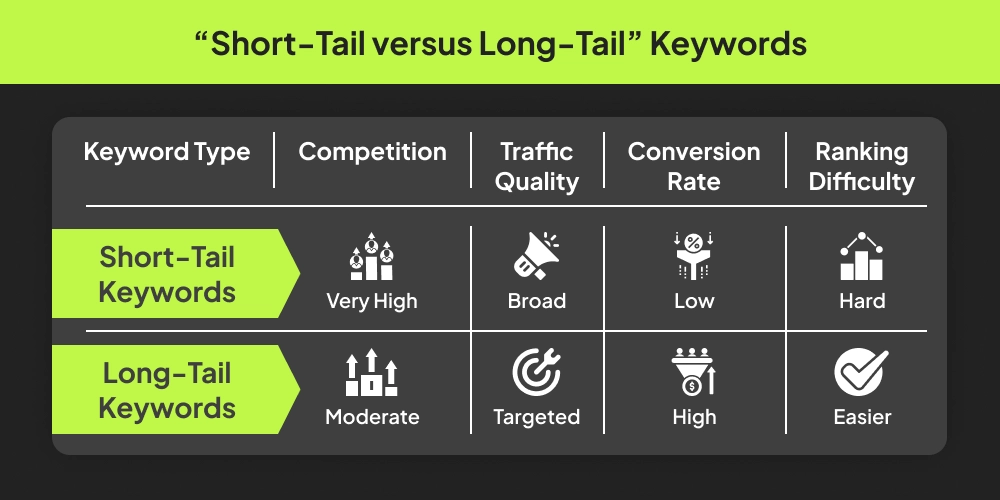
Using the right keyword with the right strategy is a game-changer. It is crucial to choose the keyword that fully fulfils the buying intent. Many SEO professionals target high-volume short-tail keywords like “SEO services (KD – 77)” or “digital marketing (KD – 91),” expecting traffic as quick as a wink.
But these keywords are already competitive and often bring fewer visitors who take action. Instead, focus on intent-driven long-tail keywords like “local SEO services for dentists” or “WordPress SEO consultant for ecommerce stores.”
With this method, we have seen businesses improve rankings, attract qualified leads, and increase conversions after shifting from broad keywords to targeted search intent strategies.
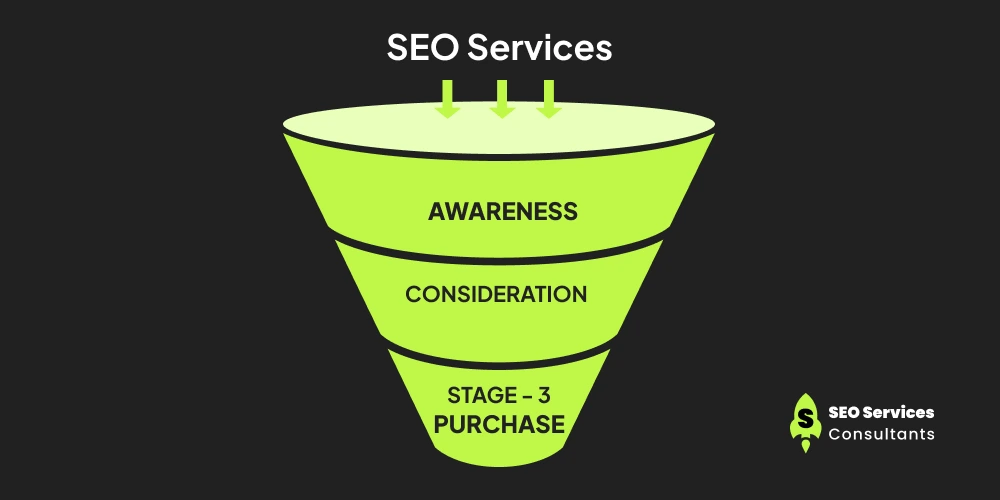
While using a funnel-based keyword strategy, first build awareness through blogs and guest posts. Then move users to the consideration stage by showing why your business is the right fit for their needs. Finally, guide them toward conversion with strong intent-focused content. To make each stage effective, you need to target the right keywords for every step of the funnel.
While using a funnel-based keyword strategy, first build awareness through blogs and guest posts. Then move users to the consideration stage by showing why your business is the right fit for their needs. Finally, guide them toward conversion with strong intent-focused content. To make each stage effective, you need to target the right keywords for every step of the funnel.
After implementing this strategy, you will definitely notice an improvement in your conversion rate because you are now targeting high-intent keywords. If a keyword is highly competitive, you can use it naturally within long-tail keywords. This approach helps you attract more qualified traffic and gradually improve your rankings for competitive search terms.
Poor website structure and slow page speed
Website structure matters. Ignoring the structure while focusing on the backlinks or content, it still can’t give you the measurable results. Poor structure push aways customer, which means neither can they come nor spend the time. If in any case, the customer can land, but the delay page load sped candefinitly sent back yor customer, which will increase the bounce rate.
Many websites also fail to organize content properly. Important pages stay buried deep inside the website, making it harder for both users and search engines to discover them. At the same time, unoptimized images, unnecessary scripts, and poor hosting further slow down performance.
Instead, create a clean website structure with proper internal linking and easy navigation. Improve Core Web Vitals by compressing images, reducing code bloat, enabling caching, and using fast hosting. A well-structured and fast-loading website helps users stay longer, improves crawlability, and increases ranking opportunities.
Content that does not fill the user content
Creating content without understanding what users actually want is one of the biggest SEO loopholes. Many websites publish generic blogs filled with keywords but fail to answer the real questions users are searching for. As a result, visitors leave the page without taking action.
Google now prioritizes content that satisfies search intent. If users search for “best SEO consultant for ecommerce,” they expect solutions, case studies, pricing insights, and practical guidance instead of vague information.
To fix this, build content around user intent. Analyze what users expect at every stage of the search journey and create content that solves their problems directly. Add examples, FAQs, statistics, visuals, and actionable insights to improve engagement and conversions.
Lack of quality backlinks, Missing or weak backlinks strategy
Backlinks still play a major role in improving website authority and rankings. However, many businesses either ignore link building completely or focus on low-quality backlinks that bring little SEO value. Spammy links can even harm your website’s performance over time.
A strong backlink strategy is not about quantity. It is about earning relevant and authoritative links from trusted websites within your industry. High-quality backlinks help search engines trust your content and improve your domain authority.
Instead of random link building, focus on guest posting, digital PR, niche edits, HARO outreach, and creating valuable content that naturally earns links. Businesses that build quality backlinks consistently often see stronger rankings, higher organic traffic, and better brand credibility.
Technical Errors that stopping google not to crawl
Even stron cann’t be on top results if the backend is blocked with technical errors. This might be broken links,m incorrect indirects, blocked pages, duplicate URLs, missing sitemaps, and poor mobile optimization. These lead to stopping Google from indexing that will generate leads and revenue.
Many agencies unknowingly block search engines through robots.txt errors or improper o index tags. This leads to lower visibility and poor organic performance.
These issues can be easily solved with regular technical checkups. This will help you to identify issues early and fix them on te time so that you can impact rankings.
Keyword cannibalization
Keyword cannibalization happens when multiple pages target the same keyword or search intent. Instead of helping rankings, these pages compete against each other and confuse search engines about which page should rank.
This often leads to unstable rankings, lower click-through rates, and reduced authority across important pages. Many websites create similar blogs or service pages without a clear content structure, which weakens overall SEO performance.
To solve this, map one primary keyword to one dedicated page. Merge overlapping content, improve internal linking, and build a clear topical structure. A proper keyword strategy helps search engines understand page relevance and improves ranking stability.
Ignoring Local SEO
Many businesses focus only on broad SEO strategies while ignoring local search opportunities. This becomes a major problem for service-based businesses that depend on customers from specific cities or nearby areas.
Without proper local SEO, your business may fail to appear in “near me” searches, Google Maps results, and local keyword rankings. This means losing high-intent customers who are actively searching for your services.
Optimizing your Google Business Profile, building local citations, collecting reviews, and targeting geo-specific keywords can significantly improve local visibility. A strong local SEO strategy helps businesses generate more calls, leads, and location-based conversions.
No ongoing SEO audits
SEO is not a one-time process. Search engine algorithms, competitor strategies, and user behavior continue to change regularly. Websites that fail to monitor and update their SEO strategy often experience ranking drops and traffic decline over time.
Without regular SEO audits, hidden issues like broken pages, outdated content, technical errors, and declining keyword performance remain unnoticed. These problems slowly weaken overall website performance.
Conducting ongoing SEO audits helps identify weaknesses early and keeps your strategy aligned with current search engine standards. Regular analysis of technical SEO, backlinks, content performance, and keyword trends helps maintain long-term growth and stable rankings.
How to Diagnose if Your SEO Isn’t Working
One of the first signs of weak SEO performance is stagnant or declining organic traffic over a period of 3 to 6 months. If your traffic is not growing consistently, your strategy likely needs improvement.
A sudden drop in keyword rankings is another clear warning sign. When important keywords lose positions in SERPs, it directly impacts your visibility, traffic, and conversions.
If most of your traffic comes only from branded keywords, it means people are searching specifically for your company name rather than discovering you through non-branded searches. This limits your ability to attract new customers organically.
High traffic with low conversions is also a major issue. It usually means you are targeting the wrong audience or ranking for keywords that do not match buying intent.
You should also check your page speed and Core Web Vitals using PageSpeed Insights. Slow-loading pages, layout shifts, and technical performance issues can negatively affect both rankings and user experience.
For indexing issues, review your pages inside Google Search Console. Navigate to the “Pages” section and confirm whether important pages are indexed properly. If Google cannot index your pages, they will not rank in search results.
Analyze your keyword strategy carefully. Avoid targeting only broad, high-volume keywords with heavy competition. Focus more on long-tail and intent-driven keywords that indicate a stronger willingness to buy or take action.
Lastly, audit your backlink profile regularly. Compare your backlinks with competitors to understand where they are earning authority and what opportunities you may be missing.
Final Says!
A weak SEO strategy does not just slow growth. It quietly holds your website back. Rankings stay low. Traffic does not grow. Leads remain unstable. You put in effort, but the results do not match it. That is usually a sign that the strategy is off track.
Search engines also notice poor structure and weak signals. Over time, your competitors move ahead while your pages struggle to keep up. This makes SEO feel like it is not working, even when work is being done.
But this can be fixed. Focus on what actually improves performance:
- Fix technical issues like slow pages, crawl errors, and broken links. These block your visibility.
- Use the right keywords. Not just high-volume ones. Focus on what users are really searching for.
- Improve your content. Keep it clear, useful, and easy to read. Avoid thin or generic writing.
- Build quality backlinks from trusted and relevant websites. This builds authority over time.
- Improve user experience. If users stay longer and engage more, rankings improve.
SEO is not about doing more. It is about doing the right things in the right way. When the foundation is strong, rankings and traffic start to grow naturally.