Your Pages Can
Be Valuable and Still Be Difficult
Your website is your brand’s digital face and primary storefront. Hence, the way it feels and performs for users and search engines plays a crucial role in turning it into a lead-generating engine. In addition, a page can provide useful information and still struggle to increase website traffic . Most of the time, it’s not because of the quality of your services or products, but how well the page communicates its relevance to users and search engines.
Content Doesn’t Match Search Intent
A page may be targeting the right keyword, but answers the wrong question. When the content on a page doesn’t reflect what searches expect, the rankings and engagement on the site suffer.
Search Engines Can’t Understand Clearly
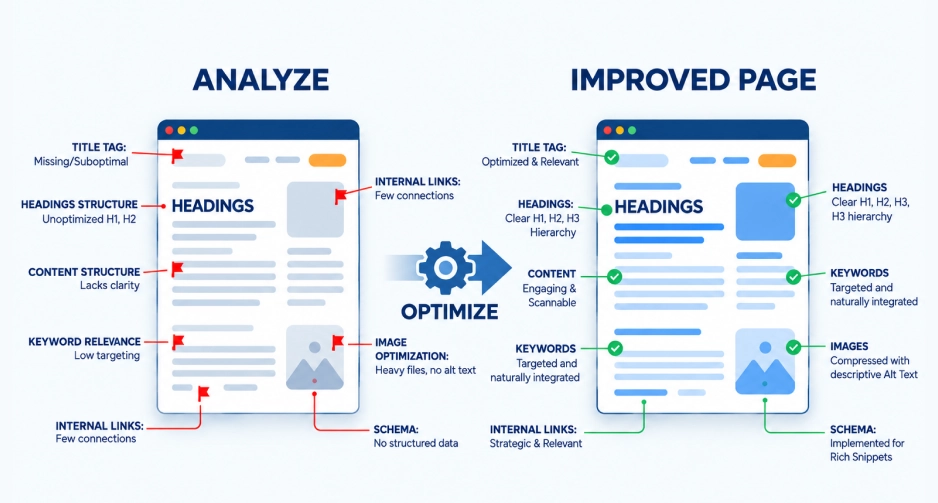
Does your page have unclear titles, weak headings, inconsistent keyword signals, or poor content structure? These can make it harder for search engines to interpret the page’s purpose.
Several Pages Target The Same Search
When multiple URLs or pages cover similar topics, they may compete for the same keywords instead of giving one page a clear focus. This can confuse search engines understand the intent.
Important Information is Buried
Weak hierarchy, long blocks of content, or poorly optimized sections can make even useful information difficult for both users and search engines to identify.
Your Pages Aren’t Well Connected
Relevant internal links help establish relationships between pages and direct users toward useful information.
The Pages Haven’t Been Revisited
Search results, competitors, and user expectations change frequently. A page that was well optimized previously may need further refinement as its search environment evolves.