Key Takeaways:
- A comprehensive SEO campaign will do much more for your site than simply putting a few keywords into your pages.
- The complete seo campaigns may include an audit of your site, keyword research, checking on your competitors, doing technical SEO, optimizing your content, building links, and using local SEO.
- SEO strategy development starts with doing research and prioritising tasks based on the strategy’s goals.
- SEO agencies are mostly busy working regularly rather than making one-time changes.
- SEO costs differ based on the specifics of the business, such as the level of competition, website size, and volume of work.
- By 2027, the market is likely to change due to the implementation of AI search systems, changes in performance metrics, and transformations of search experiences.
When it comes to hiring an SEO agency for business growth, one of the first questions businesses ask is: What exactly will the agency do?
Many seo agencies claim they can deliver top rankings, while others promise extremely low prices and fast results. Businesses should be aware of such claims because SEO involves many aspects, and it is impossible for any SEO company to guarantee any results.
Therefore, instead of focusing only on promises, businesses should look for what services and deliverables an SEO agency can offer.
A complete SEO campaign may include keyword research, SEO audit, technical SEO, on-page optimization, competitive analysis, link building, local SEO, and performance tracking. The services offered by SEO agencies may vary depending on the business-specific needs and goals.
Continue reading this guide to understand what SEO services typically include, the strategies SEO professionals use, the deliverables businesses should expect, how SEO pricing works, and how SEO may continue to change as we move toward 2027.
What Are SEO Services?
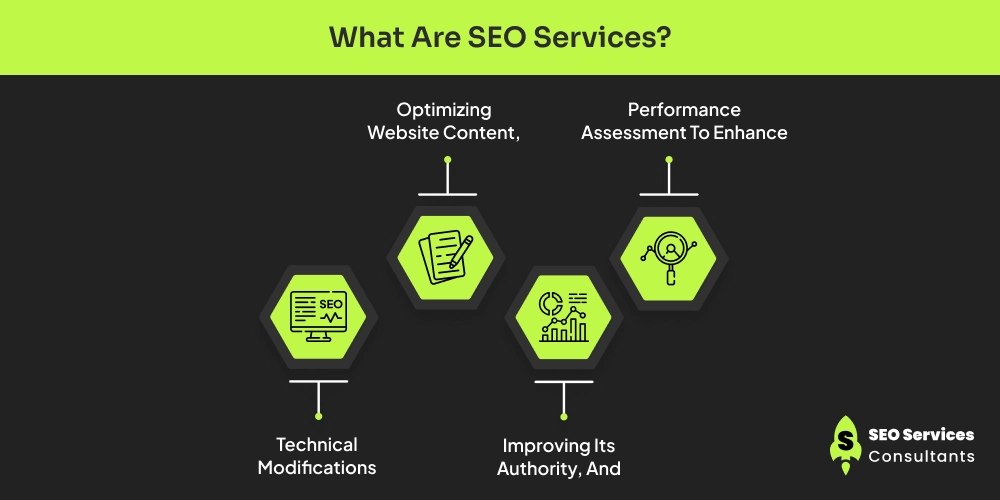
Seo services involve a wide range of technical aspects designed to improve a website’s online visibility, search efficiency, and the ability to attract the right visitors from search engines. However, proper SEO does not only require the use of some keywords within the site. It requires technical improvements, content optimization, keyword and search intent research, website structure, authority building, and continuous performance monitoring.
A comprehensive SEO strategy involves:
- technical modifications,
- optimizing website content,
- improving its authority, and
- performance assessment to enhance the understanding of the website by search engines and make it available to suitable users.
As search continues to evolve toward AI-powered and generative experiences, SEO services also move away from traditional search practices. Today’s SEO can include optimizing content not just for traditional search engines, but also to boost the brand’s presence in AI-generated results.
A variety of services included in an SEO campaign depend on different factors such as the goals of a company, its website and its size, its branch of impact, the level of competition in the niche of business, and the audience targeted by the company.
The Core SEO Services Included in an SEO Campaign
Adding keywords to a webpage or creating backlinks is not the only approach involved in successful SEO campaigns; it involves several other aspects that ensure optimal website performance in terms of its visibility and content.
For example, if your website provides relevant information, but it takes too long to load or faces technical issues, your website won’t perform well in the search space
That’s why good SEO services combine research, technical aspects, content optimization, structuring a website, creating authority, and conducting regular website performance analysis.
Google officially states several core pillars for optimizing a website, heavily emphasizing user experience and clarity over old search engine manipulation.
The following sections explain the major services that typically form part of a comprehensive SEO campaign.
1. SEO Audits and Website Analysis
An SEO audit is the first stage of any SEO campaign. Before making any new implementations to a site, it’s important to audit the current status of the site and identify major issues that may affect search performance.
An SEO audit mainly involves :
Imagine your site having hundreds of product pages, but most of the pages are facing 404 issues or have broken internal linking. The first step is to understand why the existing pages are facing this issue. That is why a website audit marks the beginning of any SEO campaign.
Tools that are used for website audit
- Free tools: Google Search Console, Semrush, Screaming Frog SEO Spider
- Paid tools: Semrush Site Audit, Ahrefs, Sitebulb
- AI tools: Screpy, Claude SEO
2. Keyword Research and Search Intent
Finding what people are actually searching for online and why they are searching is very important for a business. Effective keyword research goes beyond finding popular search terms.
For example, people search for:
- What is seo
- Best tool for seo
- Best seo strategies for 2027
While all these search queries are related to SEO, the intent behind each search is different.
Someone searching for What is SEO? is probably looking for basic information. In contrast, someone searching for an SEO agency for small businesses may be looking for a service provider.
Businesses, therefore, need to understand the intent to create content that better matches what users need.
Check: You can explore our complete guide to SEO keyword research to understand this process in greater detail.
Points to consider for better keyword research:
What Google recommends for keyword research
- Check what your audience is searching for
- Avoid keywords that are too broad
- Use your website for better ideas
- Choose keywords that accurately describe your products or services
Tools that are used for Keyword research
- Free tools: Google Keyword Planner, AnswerThePublic
- Paid tools: Semrush, Moz Keyword Explorer
- AI tools: Optimo, an AI keyword tool
3. Competitor Research and Search Opportunities
Competitor analysis helps businesses to understand the environment in which they are competing. It gives an idea of what their competitors are doing.
Let’s say a small accounting firm is looking to attract small business owners through organic search. Various competitors may offer comprehensive guides that explain taxes, invoices, expenses, and even financial planning. If a firm’s site consists of service pages only, competitive research reveals an opportunity for creating useful educational resources for future customers.
The goal does not consist of copying one’s competitors, but using their research to answer the question of what opportunities exist and how it can create something new and useful.
Here is what is involved in competitor analysis:
4. On-Page Optimization
It mainly focuses on improving webpages of the site. The main aim is to ensure that every page is clear, informative, relevant, and conveys easy understanding to its visitors.
For example, if the title of a webpage is ambiguous with missing heading and not deliver enough valuable information, and lacks proper structure of the page, visitors will not understand what the site is offering.
On-page optimization could improve the page by creating a clear title, organizing the content into useful sections, answering common questions, and connecting the page to other relevant resources.
Several factors to consider in on-page optimization:
5. Technical SEO
Imagine you search for the best AI seo tools for competitor gap analysis, and the website is taking so much time to load. Instead of waiting, you switch to another site to get relevant answers to your query. This shows that any technical issue on a website will impact its user experience.
That’s why Technical SEO is important, especially for large websites. It focuses on strengthening a site’s foundation that helps search engines access, crawl, understand, and index a website.
Technical seo involves :
6. Content Strategy and Content Optimization
Content is the main pillar of SEO. It’s not about publishing many articles or blogs on the website, but the main goal is to provide correct, relevant information to users.
For example, an SEO agency may want to attract businesses looking to increase their brand visibility. Instead of publishing random articles, focus on those topics that directly address the needs of users.
Such as: How to choose the right SEO agency for 2027 or Common SEO mistakes that can affect website rankings
A comprehensive/strategic content service includes :
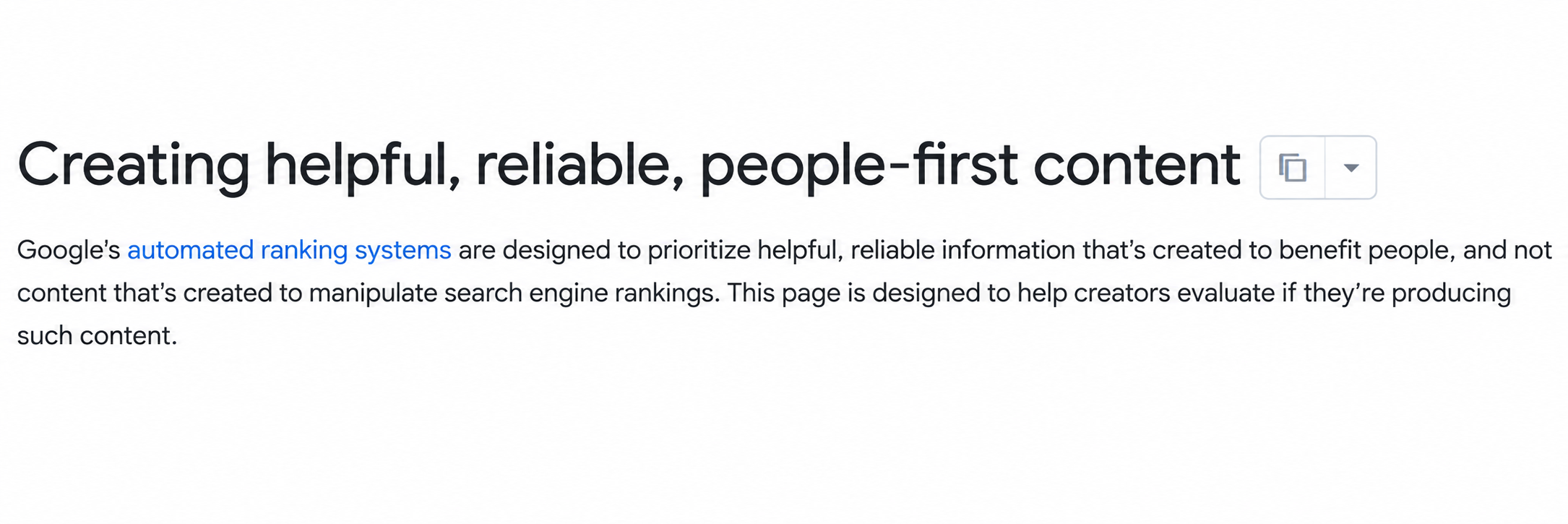
Google focuses on original, people-first information
7. AI Search Visibility and Generative Engine Optimization
The way people search for information is continuing to change as AI-powered search experiences become more widely available. Earlier, users usually browsed through multiple links on Google to get relevant information.
However, with AI – driven search, users can now receive summarised information (at the top of the Google AI overview box). This shift means businesses must look beyond traditional search rankings and understand how visible their brand and content are across AI-powered search platforms.
Businesses need to prioritize AI search visibility, which focuses on ensuring their brand, expertise, and content appear in AI results for relevant user queries.
For example, if users simply type on Google, “What are the best SEO techniques for a small business?”, an AI search provides a summarized answer based on information available from different sources.
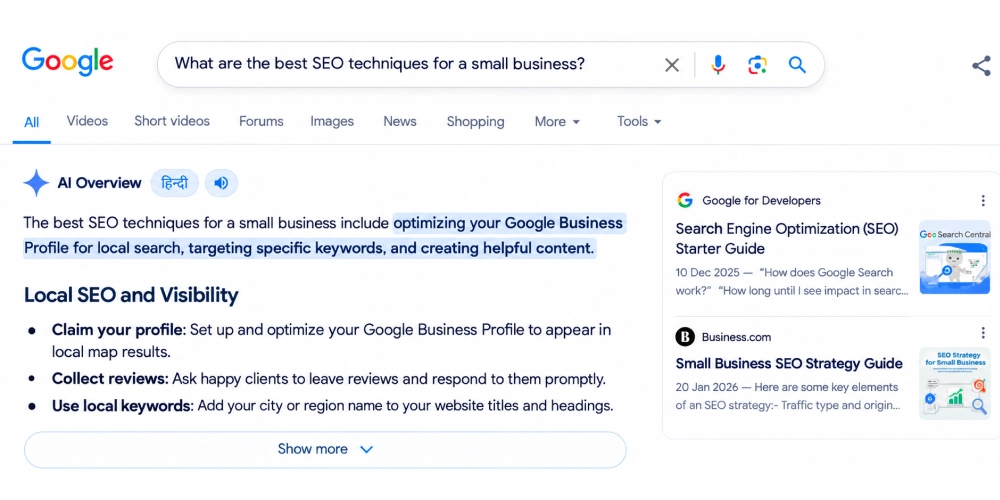
Therefore, businesses should focus on publishing useful and relevant information that clearly answers important user questions.
Check: How AI-generated content can be used responsibly while maintaining originality and accuracy.
Key Areas To Focus On For Better AI Visibility :
8. Performance Measurement and Continuous Optimization
SEO not only focuses on optimizing websites and publishing new content. Businesses need to monitor performance constantly to understand whether their SEO service is producing useful insights or not.
SEO requires continuous improvement because search behavior, competition, website content, and technology can change over time. Regular optimization may include updating outdated content, fixing new technical issues, improving underperforming pages, and identifying new search opportunities.
For example, after publishing articles, some pages may attract significant organic traffic while others may not perform as expected. Businesses need to check which pages require improvements and which techniques work well.
SEO performance can be measured using several metrics:
What Deliverables Should You Expect From an SEO Agency?
Before hiring an SEO agency, businesses should clearly understand what work will be performed and what they will receive during and after the campaign.
Common SEO deliverables may include:
SEO Strategy and Discovery - Initial Deliverables
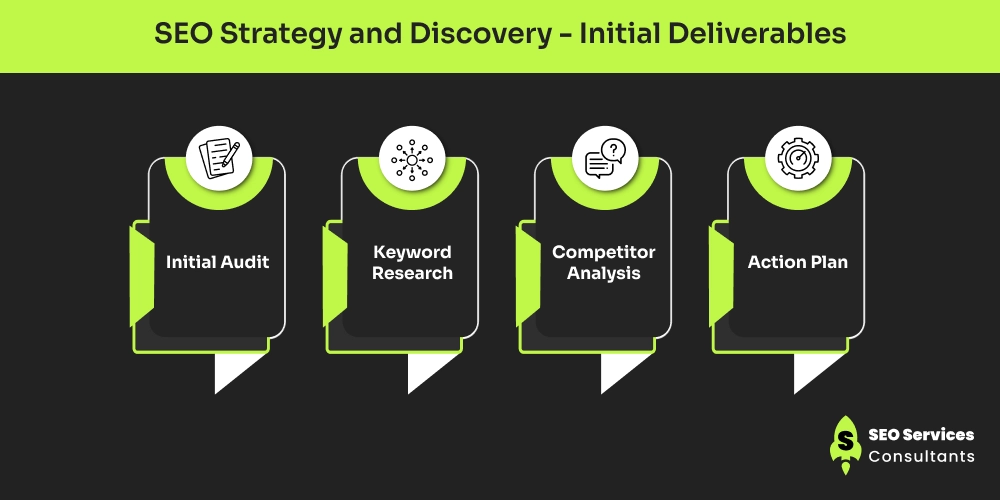
- Initial Audit: It includes a detailed website audit that identifies technical issues, crawlability, and indexing problems
- Keyword Research: Identify the most relevant search terms based on target users, search intent, and business goals.
- Competitor Analysis: An analysis of competitors' sites to identify their strategies for better improvements.
- Action Plan: A clear roadmap that summarises the priorities, necessary procedures, and a general strategy for SEO campaigns for the coming months.
SEO Implementation and Growth - Ongoing Deliverables
- On-Page Optimizations: It involves improving important pages like titles, headings, meta descriptions, content structure, internal links, and image optimization.
- Content Creation: It includes activities regarding content briefs, new content, and content recommendations for improvement.
- Authority and Link Building: It includes activities connected to providing reports about related outreach, backlinks, brand mentions, etc.
SEO Performance and Reporting
- SEO Performance Tracking and Reporting: Making reports that include information about changes in organic traffic, clicks, impressions, conversions, and overall results of the SEO campaign.
Read Our Detailed Blog: What To Expect In The First 90 Days of SEO
How Is an SEO Strategy Developed?
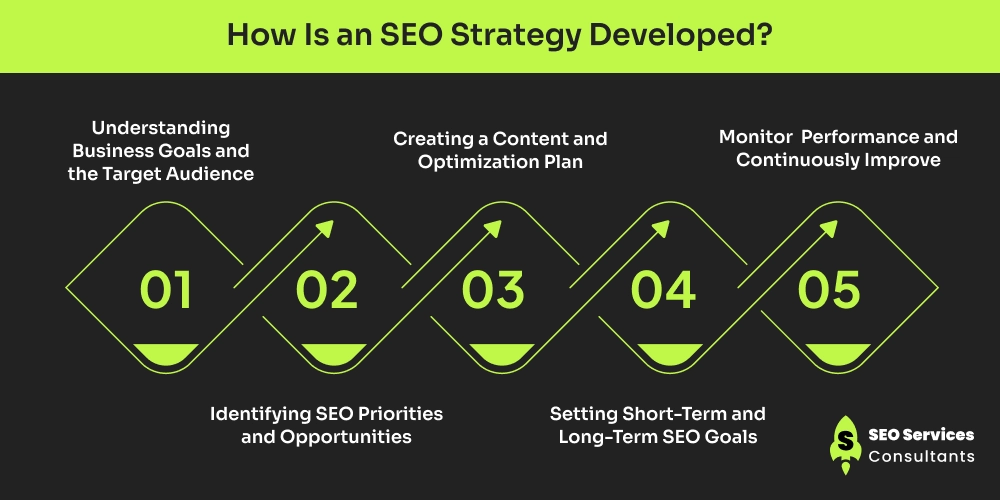
An SEO strategy is a structured plan that connects SEO activities with specific business goals. While SEO services include techniques like keyword research, technical SEO, content optimization, etc., an SEO strategy connects these activities to achieve specific business goals.
The following steps are commonly used to develop an effective SEO strategy:
1. Understanding Business Goals and the Target Audience
The first step is to understand what the business wants to achieve. Some businesses focus on brand awareness, and some want to generate more leads
Similarly, it’s important to understand your target audience and what they are searching for. This helps businesses create an SEO strategy that focuses on attracting relevant visitors rather than simply increasing website traffic.
2. Identifying SEO Priorities and Opportunities
After understanding business goals and target audience, the next step is to analyse the website to identify weaknesses and areas for improvement.
This includes checking technical issues, existing content, keyword gap analysis, and competitor analysis.
Identifying these gaps helps create a more focused SEO strategy instead of making random changes across the website.
3. Creating a Content and Optimization Plan
This mainly involves which pages need optimization, what kind of new content should be created, which topics should be covered, and how important pages should be connected through internal links.
Instead of publishing random articles, businesses should focus on creating content around topics that are relevant to their audience, services, and overall business goals.
4. Setting Short-Term and Long-Term SEO Goals
SEO is primarily a long-term process, so it is advantageous to set goals for both the short and long term.
Short-term objectives can include finding and solving technical problems, optimizing critical website pages, performing keyword analysis, and improving site structure.
Long-term objectives can include improving organic visibility, acquiring targeted traffic, generating leads, and increasing brand authority.
Setting clear goals helps businesses and SEO agencies measure whether the strategy is moving in the right direction.
5. Monitor Performance and Continuously Improve
YOUR SEO STRATEGY ROADMAP
A well planned seo strategy for
- First 30 days Focus: Focus on seo audit, identify technical issues, keyword and competitor analysis, and set priorities for the campaign
- Days 31–60: Resolve critical technical problems, optimize important pages, improve internal linking, and create useful content.
- Days 61- 90: Concentrate on credibility growth, useful backlinks or brand references, keep track of SEO work, and define the areas to improve further.
How Long Does It Take to See SEO Results?
There is no exact answer for this.SEO results can vary significantly depending on factors like website authority, competition, technical status, quality of content, and the amount of work required.
- Months 1 to 3: This phase includes website audit, keyword research, competitor analysis, and optimizing main pages.
- Months 4 to 6: Start with page optimization for better visibility for less competitive searches, as well as improvement in ranking and clicks
- Months 6-12: Consistent website optimization, technical improvements, and authority-building efforts can lead to more stable rankings, increased organic traffic, and better business results.
What Is Changing About SEO as We Move Toward 2027?
Here is a general look at how SEO may continue to evolve toward 2027:
Aspect |
Before |
After |
|---|---|---|
| Search Experience | Users searched for short keywords and browsed multiple links | Users get summarised answers in AI Overview and AI tools like ChatGPT, Perplexity, and so on. |
| Content Optimization | Earlier usually focused on targeting individual keywords and ranking pages. | Now, more focus on helpful, original, well-structured content that answers users' questions clearly. |
| Authority and Visibility | For building website authority, focus was placed on backlinks | Now, focus shifts to brand mentions, digital PR, credibility, and demonstrated expertise may become increasingly valuable. |
| Technical Optimization | SEO mainly focused on crawlability, indexability, website structure, and performance. | Technical foundations remain important, but more focus is now placed on clear website information and structured content. |
| Role of AI | AI tools had limited use in SEO workflows. | AI can support research, analysis, content planning, and data interpretation, while human expertise remains important for strategy and decision-making. |
Conclusion
SEO services consist of more than inserting a few keywords and acquiring backlinks. Effective SEO involves implementing technical changes, researching keywords and user intent, optimizing content, creating an appropriate website structure, and continuous performance monitoring.
As we move toward 2027, businesses may also need to focus on AI visibility, brand authority, and new ways of evaluating search results. The fundamental goal of seo remains unchanged. Choosing the right SEO strategy depends on a business’s goals, audience, website status, and level of competition, rather than promises of instant rankings or guaranteed results.
Frequently Asked Questions
1. How are SEO services different from SEO deliverables?
Seo services involve activities like technical optimization, keyword research, and content improvements.
SEO deliverables are actual outputs of those activities, such as an SEO audit report, keyword research document, optimized pages, content briefs, or performance reports.
2. Can the same SEO strategy work for every business?
No, SEO strategies are based on factors such as business requirements, target audience, industry, competition, website current condition.
3. What questions should a business ask before starting an SEO campaign?
Every business should ask about the proposed strategy, services included, expected deliverables, reporting process, implementation responsibilities, and how success will be measured. These questions can help businesses understand whether the provider’s approach matches their requirements.
4. Will keywords still matter in 2027?
Yes. Keywords will still matter, but SEO will focus more on search intent, context, and creating helpful content rather than simply repeating keywords.
5. Can ChatGPT do SEO?
ChatGPT can assist with many search engine optimization (SEO) tasks, but it cannot fully replace human strategy or dedicated SEO software.